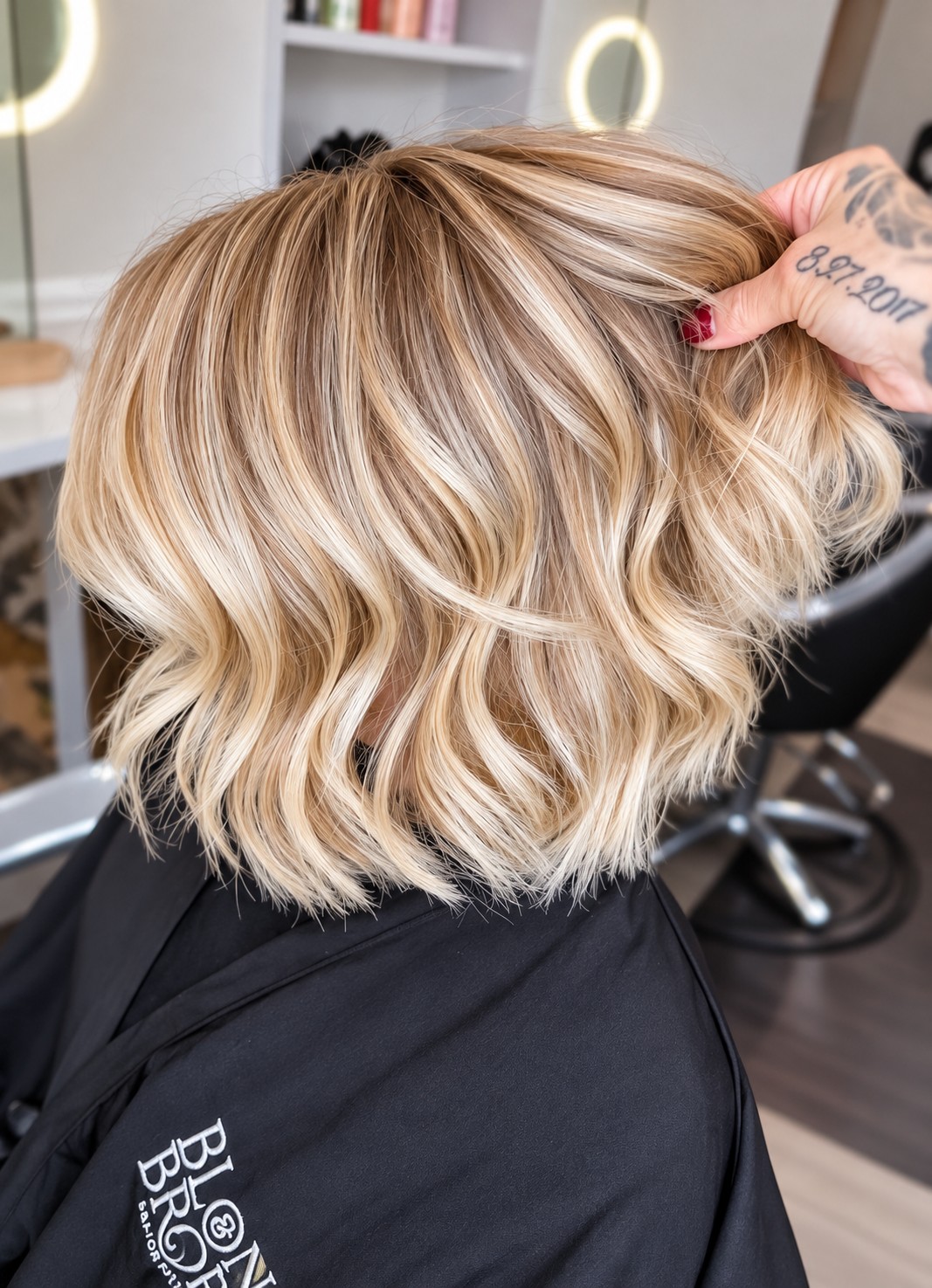
| Quick answer: Most people do well with a haircut every 6 to 8 weeks, but how often should you get a haircut depends on your hairstyle and how well you want to maintain its shape. Pixies and short, shaped cuts usually need a visit every 4 to 6 weeks. Bobs and lobs sit at about 6 to 8 weeks, while long hair with layers can stretch to 8 to 12 weeks. Bangs need a quick trim every 2 to 4 weeks. Book sooner if you notice split ends, a lost shape, or hair that has stopped behaving as it should. |
Ask ten people how often to get a haircut and you will hear ten answers, from “every six weeks, no exceptions” to “whenever I remember.” Both can be right. How often you need a cut comes down to the shape you wear, how fast your hair grows, and how much the shape matters to the way you look. A sharp bob falls apart in a few weeks. A long, softly layered cut can look good for three months.
At Blonde and Bronde Salon on Newbury Street, we cut hair of every length, so here is a plain-spoken schedule you can use, plus the signs that tell you it is time before the calendar does.
How often should you get a haircut?
The most common guidance is every 6 to 8 weeks, which is a good starting point for medium-length hair that has some shape. Hair grows about half an inch a month on average, so six to eight weeks adds roughly an inch. That is enough to soften a defined shape and start to show in the ends, even if the length still feels fine. The ranges below are typical, and your own hair may sit a little shorter or longer depending on texture, growth rate, and how much you care about keeping the shape crisp.
What is the haircut schedule by length and style?
| Cut | Typical schedule | Why |
| Pixie or very short cut | Every 4 to 6 weeks | A small amount of growth changes the whole silhouette, especially around the ears and neckline. |
| Blunt bob or sharp lob | Every 4 to 8 weeks | Clean lines and a defined edge look best when they are fresh. |
| Textured or softly layered bob and lob | Every 6 to 8 weeks | Softer shapes hide growth longer. |
| Mid-length layers | Every 6 to 10 weeks | Layers keep their movement until they grow into the face. |
| Long hair with light layers | Every 8 to 12 weeks | Length hides growth, and the focus is on keeping ends healthy. |
| Long hair, one length | Every 10 to 12 weeks, or as needed | Mostly about removing damaged ends. |
| Bangs | Every 2 to 4 weeks (a quick trim) | Bangs reach your eyes quickly, and they are often a short, simple visit. |
| Men’s short cuts | Every 3 to 5 weeks | Tight tapers and fades lose their shape fast. |
Our short haircut service covers cuts above the ear, including pixie and men’s cuts, and uses precision cutting and razor cutting to keep shape and texture. Short cuts reward a regular schedule more than any other length, because every quarter inch counts.
How often should you trim short hair?
Every 4 to 6 weeks for most short cuts. With a pixie, crop, or tight taper, a few weeks of growth can add bulk around the ears, lengthen the nape, and flatten the top. Many clients on short hair settle into a steady rhythm so the cut always looks intentional rather than overgrown. If your cut is textured and softly shaped, you can often stretch to 6 weeks without anyone noticing.
How often should you trim a bob or lob?
Every 6 to 8 weeks for most bobs and lobs, and closer to 4 to 6 weeks if the line is very blunt. A bob is a shape, and the shape depends on the length staying put. As hair grows, a bob drifts longer in the back and rounder at the bottom, which makes the weight sit in a different spot. A trim resets the line without changing the length you chose. For a deeper look at the cuts people choose in Boston, see our guide to haircuts that never go out of trend.
How often should you trim long hair?
Every 8 to 12 weeks is typical for long hair, and some people can go longer if their ends are healthy and they are growing length. With long hair, the goal is usually to remove damaged ends before they travel up the strand, not to maintain a precise line. Long layers and face-framing pieces also need a refresh every few months so they do not lose their shape. Our long haircut service covers every cutting technique for hair below the ear, from soft layers to a clean blunt finish.
How often should you trim bangs?
Every 2 to 4 weeks. Bangs are the part of a haircut that changes the fastest. A quarter inch of growth is enough to bring them into your eyes, and it usually takes only a few minutes to fix. Many salons offer quick bang trims between full haircuts, so ask your stylist whether a short visit is available.
What signs tell you it is time for a haircut?
Your calendar is a guide. Your hair gives a more accurate signal. It is probably time to book if you notice any of these:
- Split ends. If the ends of a strand are splitting or fraying, trimming is the way to remove them. A split end cannot be repaired by a product, only covered for a while.
- A lost shape. Your cut used to fall in a certain way and now it does not.
- More tangles at the ends. Rough, dry ends catch on each other.
- Styling takes longer. If you are fighting your hair each morning, the cut may have grown out.
- Hair looks thin or stringy at the bottom. Worn ends make hair look thinner than it is.
- Your layers have stopped doing anything. Overgrown layers lose movement.
Do blondes and color-treated hair need more frequent trims?
Often, yes, at least at the ends. Lightened hair is more porous and more prone to dryness and breakage than untouched hair, so the ends tend to wear out faster. Many blondes find that keeping a regular trim schedule, especially around color appointments, helps the color look fresh and keeps the ends from looking frayed. If you lighten your hair regularly, ask your stylist whether to plan a trim every time you come in for color. When you book a haircut together with color or keratin, select the “Add On” timing option. For a haircut by itself, select the full time.
Does cutting hair make it grow faster?
No. Hair grows from the follicle under your scalp, and cutting the ends does not change the speed. What a trim does is remove damaged ends so your hair keeps its length instead of breaking off. If you are growing your hair out, regular small trims can help you reach your goal length with healthier-looking ends. Ask your stylist to take off as little as possible, such as a quarter inch, and expect to go less often than you would with a shape you want to keep.
How can you stretch the time between haircuts?
A few habits keep your cut looking good for longer:
- Choose a cut that grows out well. Soft layers and textured shapes hide growth much better than a blunt line. Ask your stylist for a cut designed to grow out gracefully.
- Limit heat. The American Academy of Dermatology notes that excessive heat can cause damage, and recommends limiting blow drying and the use of flat and curling irons.
- Handle wet hair gently. The AAD advises using a wide-tooth comb instead of a brush to detangle wet hair, because hair is delicate when it is wet.
- Use a heat protectant whenever you style with heat.
- Book a quick shape-up. Some clients keep a bang or neckline fresh with a short visit between full haircuts.
Read the full guidance from the American Academy of Dermatology on healthy hair tips if you want the dermatology perspective on everyday care.
What should you ask your stylist about your schedule?
Your stylist knows your hair better than any chart does. At your next visit, ask:
- How quickly does this cut lose its shape on my hair?
- What is the longest I can wait before it starts to look overgrown?
- Is there a way to cut it so it grows out better?
- Should I come in for a quick trim between full cuts?
- How do my color or other services affect when I should trim?
Frequently Asked Questions About Haircut Frequency
How often should you get a haircut to keep hair healthy?
Most people do well with a trim every 6 to 8 weeks, and long hair can often go 8 to 12 weeks if the ends are in good shape. Book sooner if you see split ends, tangles at the ends, or a cut that has lost its shape.
How often should you get a haircut if you are growing your hair out?
Every 10 to 12 weeks is common for a grow-out. Ask your stylist to remove only the damaged ends and to keep the shape you are working toward, which protects your length while keeping the ends healthy.
Do short haircuts need more frequent trims?
Yes. Pixies and other short cuts usually need a visit every 4 to 6 weeks, because a small amount of growth changes the silhouette. Softly textured short cuts can often stretch toward 6 weeks.
How often should you trim bangs?
Every 2 to 4 weeks is typical. Bangs grow into your eyes quickly, and a short trim keeps them looking intentional. Many salons offer a quick bang trim between full haircuts.
Does cutting your hair make it grow faster?
No. Hair grows from the follicle, and trimming the ends does not change the growth rate. Regular trims remove damaged ends so hair keeps its length instead of breaking off.
Do I need extra time if I book a haircut with color?
Yes. When you combine a haircut with another service such as color or keratin, select the “Add On” timing option. If the haircut is your only service, select the full time when booking.
The bottom line on how often to get a haircut
Use the calendar as a starting point and your hair as the final word. Short cuts and sharp shapes need a visit every 4 to 6 weeks, bobs and lobs about every 6 to 8, long hair every 8 to 12, and bangs every 2 to 4. Watch for split ends, a lost shape, and hair that has stopped cooperating, and book when you see them. Ready for a fresh cut? Use the Book Now button at the top of the page to reserve your visit at our Newbury Street salon in Boston’s Back Bay.