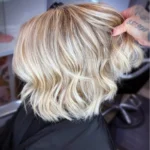
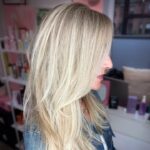
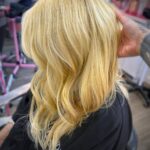
Quick answer: Gray blending softens gray hair with highlights, lowlights, or sheer color so it reads as dimension instead of regrowth, while gray coverage uses opaque color to hide every strand. Blending is lower-maintenance, with a softer grow-out and visits commonly spaced 8 to 12 weeks apart. Full coverage gives a uniform shade but needs root touch-ups every 4 to 6 weeks. Blending tends to work best when you’re under about half gray, though a skilled colorist can adapt it for more.
One of the most common things people say in a consultation is “I just need my gray covered.” It sounds like a single request, but there isn’t a single service behind it. The real question is whether you want your gray hidden or integrated, and the answer changes the technique, the grow-out, and how often you’ll be in the chair. Neither choice is wrong. They’re two different looks with two different commitments, and knowing the difference before you book makes the whole conversation easier.
What Is Gray Blending?
Gray blending is a color approach that softens the contrast between your gray and your natural color instead of concealing it. A colorist uses highlights, lowlights, or sheer glosses to weave tone and dimension through the hair, so the gray strands read as part of the design rather than as regrowth. The gray is still there. It just looks intentional, and there’s no harsh line at the part when new growth comes in.
What Is Gray Coverage?
Gray coverage uses permanent color to conceal gray hair completely, giving you one even shade from the roots through the lengths. At Blonde and Bronde, that’s what a single process color does: it’s one of the most effective ways to achieve full, natural-looking gray coverage without patchiness. It gives the most polished, uniform result, and it comes with a regular rhythm, since most clients return every 4 to 6 weeks as new growth appears.
Gray Blending vs. Gray Coverage: How Do They Compare?
| Gray coverage | Gray blending | |
|---|---|---|
| Goal | Hide every gray strand | Soften gray so it looks intentional |
| Technique | Single process color | Highlights, foilyage, balayage, or lowlights, with a gloss |
| Finish | Uniform, solid color | Dimensional, multi-tonal |
| Grow-out | A visible line as roots come in | Soft, with no harsh line |
| Typical return | Every 4 to 6 weeks | Roughly 8 to 14 weeks, depending on technique |
| Best for | A polished, no-gray look | A natural, lower-maintenance look |
How Much Gray Do You Have, and Does It Matter?
It matters, though it’s a guide rather than a rule. When you’re under about 50 percent gray, blending usually looks most natural, because there’s enough of your base color for highlights and lowlights to break up the silver. As the percentage climbs, blending can still work beautifully, but the colorist often leans toward a lighter palette, such as soft beige or champagne blonde, so the gray becomes part of the design instead of something to hide. At very high percentages, full coverage can be easier to maintain over time.
Your gray’s pattern matters as much as the percentage. Gray concentrated at the temples or the part calls for a different placement than gray scattered evenly, which is why a photo from someone else’s head never tells the whole story.
Is Gray Hair Different to Color?
Yes, often. Gray hair has lost its pigment, and it tends to be coarser and drier than the rest of your hair, which can make it more resistant to color and more prone to looking wiry. A skilled colorist adjusts the formula and processing for that, rather than treating it like the rest of your hair. At home, a moisturizing routine makes a visible difference to how gray hair looks and feels, and blending tends to be gentler on dry hair than repeated all-over lightening.
Which Services Blend Gray at a Blonde Specialist?
For blonde and blonde-leaning clients, the tools are the same ones that create dimensional color, applied with the gray pattern in mind:
- Partial foil highlights brighten the face frame and crown and help blend regrowth for a seamless finish.
- Partial foilyage blends old highlight lines and softens regrowth with a custom shadow root, which makes it a strong option for a lived-in look.
- Balayage offers the softest grow-out, with most clients returning every 10 to 14 weeks.
- Double process suits clients who want gray coverage plus a lighter, brighter blonde overall.
- Reverse balayage adds depth back when highlights alone start to look too bright or flat.
If you’re drawn to a lived-in finish, our partial foilyage is a good place to start, since the custom shadow root is built to soften regrowth lines.
Why Does Blonde Hide Gray So Well?
Because gray and blonde sit close together in tone. When your surrounding hair is light, the contrast between it and a silver strand shrinks, and the gray stops standing out. Highlights also break up the pattern of gray, so instead of a defined line of silver at the part, you see a soft mix of light tones. A gloss keeps the whole thing looking fresh, since gray and very light hair can take on a yellow tint over time without regular toning.
How Does a Gray Blending Appointment Work?
- Consultation. Your colorist looks at how much gray you have, where it sits, your texture, and the look you want.
- Placement. Highlights or lowlights are placed around the gray pattern, following where it shows most.
- Processing. The color is processed to the level that suits your hair, with the extra care gray hair often needs.
- Gloss or toner. A custom tone ties the lightened and natural hair together.
- Root blend and finish. A soft root blend smooths the transition, and the hair is styled so you can see the finished gradient.
Can You Switch From Full Coverage to Blending?
Yes, and it’s one of the most common reasons people book a consultation. Moving from solid coverage to a blended or natural gray look usually takes several visits. The colorist gradually introduces highlights and lowlights to break up the old color while your gray grows in, instead of stripping everything at once. It protects your hair and keeps the grow-out from ever looking like a stripe. If you’re considering growing your gray out completely, talk to your colorist about a plan, because blonde highlights and toning can make that transition far more comfortable.
How Often Will You Need to Come In?
- Full gray coverage (single process): every 4 to 6 weeks.
- Foil-based blending: typically every 8 to 12 weeks.
- Balayage-based blending: typically every 10 to 14 weeks, and some clients stretch longer.
- Gloss or toner in between: every 4 to 8 weeks to keep the tone fresh.
That gap is the main practical difference between the two approaches. Many clients who switch to blending say the biggest surprise is how much calendar time it gives back.
What Mistakes Should You Avoid?
- Going too dark at home. Going several shades darker than your natural color is one of the most common home-color mistakes, and it makes regrowth far more obvious.
- Expecting blending to hide every gray. If you want zero gray visible, full coverage is the right tool.
- Skipping the gloss. Without toning, a blend can start to look yellow or dull.
- Choosing a technique from someone else’s photo. Different gray patterns need different placement.
- Layering box dye on top of salon color. It builds up and can make future blending harder.
How Should You Talk to Your Colorist About It?
- Say whether you want your gray hidden or softened, using those exact words.
- Tell them how visible you’re comfortable letting regrowth get.
- Bring two or three photos of looks you like, and one you don’t.
- Be honest about how often you realistically want to be in the chair.
A personalized hair consultation is the best way to look at your gray pattern in person and choose between coverage, blending, or a mix of both.
Frequently Asked Questions
What is gray blending?
Gray blending is a color approach that uses highlights, lowlights, or sheer glosses to soften gray so it looks intentional, instead of covering every strand.
Is gray blending the same as gray coverage?
No. Gray coverage uses permanent color to conceal all gray in one even shade. Gray blending softens the contrast so the gray stays but reads as dimension.
Does gray blending completely hide gray?
No. The goal is to make gray less noticeable, not invisible. If you don’t want to see any gray, full coverage is the better choice.
How often do you need gray blending touch-ups?
Foil-based blending is typically refreshed every 8 to 12 weeks and balayage-based blending every 10 to 14 weeks, compared with every 4 to 6 weeks for full gray coverage.
Can you blend gray with blonde highlights?
Yes. Blonde highlights are one of the most effective ways to blend gray, because lightened hair and gray are close in tone, so the contrast softens and regrowth is far less noticeable.
Final Thoughts
Hiding gray and blending it are both valid, and the right one is the look you’ll actually enjoy living in. Coverage gives you polish and a steady rhythm. Blending gives you softness and more time between visits. Many people start with one and move to the other as their gray, and their schedule, changes.
Curious which would suit you? Book a consultation and bring a photo of the look you’re picturing.
Helpful Resources
- WebMD — Gray Hair: Coloring and Caring for It
- American Academy of Dermatology — Coloring and Perming Tips