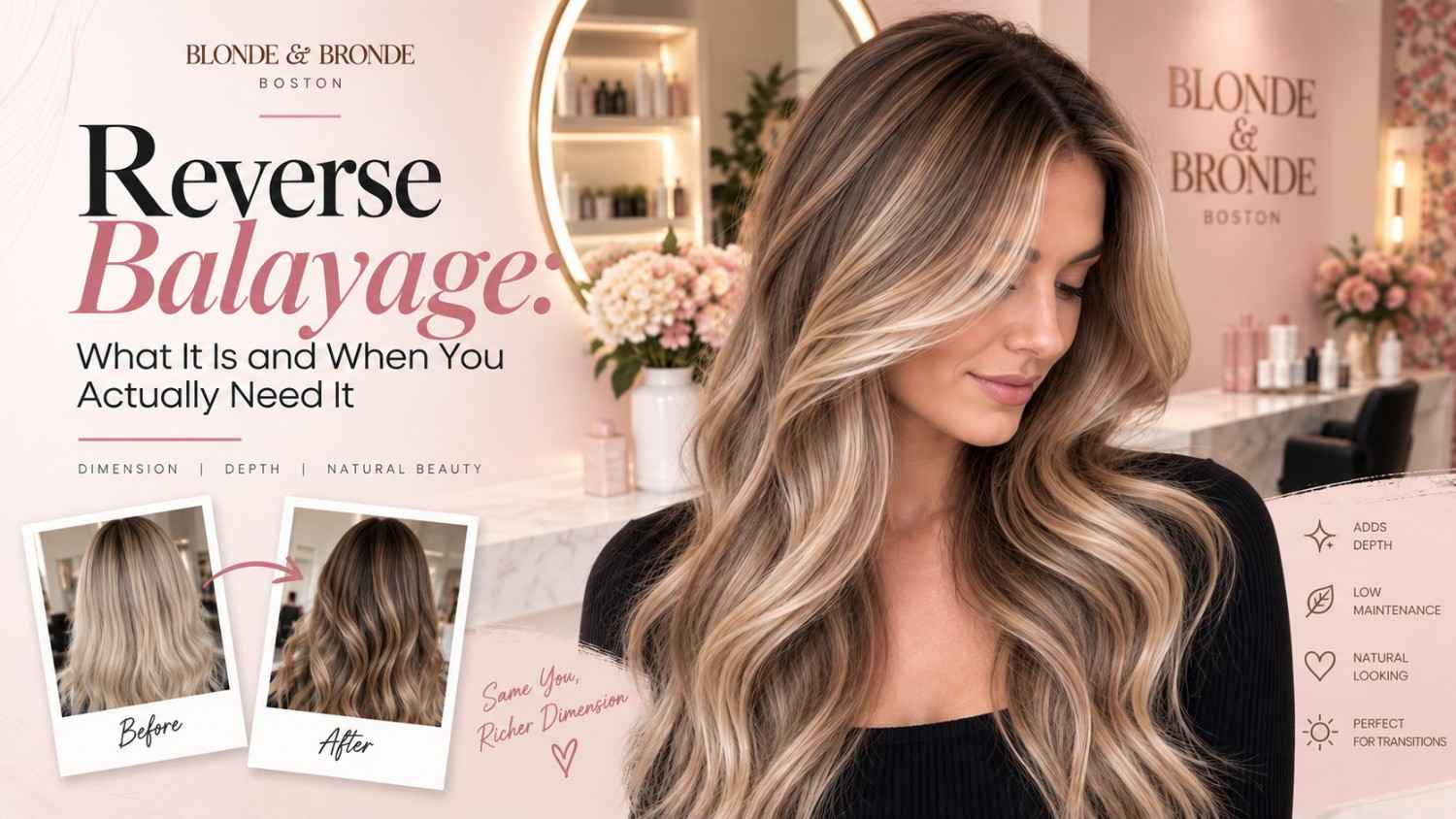
Quick answer: Reverse balayage adds lowlights back into hair that’s become too light or brassy from repeated highlighting, instead of lightening it further. It’s the go-to fix for blonde that’s drifted flat, overly bright, or lost its natural-looking depth, and it’s often the bridge between years of highlights and a softer, lower-maintenance look.
Most balayage conversations are about going lighter. Reverse balayage is the opposite move – and it’s mentioned constantly in passing without ever really being explained. If your blonde has gone brighter than you meant it to, or just feels flat and one-dimensional, this is probably the technique your stylist is talking about.
What Is Reverse Balayage?
Reverse balayage is a technique that adds darker, dimensional lowlights back into hair that’s already light – the opposite of traditional balayage, which lightens. Instead of painting on lightener, a colorist hand-paints a deeper shade through sections of hair to reintroduce depth, warmth, or contrast that’s been lost after years of highlighting.
Why Would You Want to Add Color Back In?
Highlights and balayage build up over time. Each session lightens a little more, and after enough rounds, hair can end up looking flat, brassy, or artificially bright rather than naturally sun-kissed. Reverse balayage breaks up that flatness by putting some of the original depth back, which reads as more natural and dimensional than uniformly light hair does.
How Do You Know If You Need It?
- Your blonde looks flat or one-dimensional rather than dimensional
- Your highlights have built up over multiple sessions and gone lighter than you actually wanted
- Your hair looks brassy no matter how often you tone it, because there’s simply too much lifted hair and not enough depth to balance it
- You want to move toward a softer, lower-maintenance look like recession blonde without starting over with a full color strip
Is Reverse Balayage the Same as Going Back to Your Natural Color?
Not exactly. Reverse balayage adds dimension and depth while still keeping blonde as the dominant tone – it’s a rebalancing move, not a full reversal. If your actual goal is returning fully to your natural color rather than just softening an overly bright blonde, that’s a longer process with its own approach and timeline, not a single reverse balayage session.
How Is It Different From a Color Correction?
Reverse balayage is a planned, cosmetic adjustment for hair that’s healthy but simply too light or flat. A color correction is a bigger, often more urgent process for fixing hair that’s uneven, damaged, or the result of a color gone wrong – box dye disasters, botched bleach jobs, or banding. Reverse balayage is sometimes used as one tool within a larger correction, but it isn’t a correction on its own; it’s more often a refresh for hair that’s simply drifted lighter than intended over time.
What Happens During a Reverse Balayage Appointment?
- A consultation to assess how much depth needs to go back in, and where
- Hand-painted application of a deeper shade through select sections, following the hair’s natural fall
- A toner or gloss to blend the new depth with your existing blonde so it looks intentional rather than patchy
- A finishing style so you can see exactly how the new dimension reads once it’s dry
Does Reverse Balayage Make Maintenance Easier?
Often, yes. Adding depth back in reduces the contrast between your root and your lightened ends, which is part of what makes a color look overdue in the first place. Many clients find their color stretches further between appointments after a reverse balayage, simply because there’s less stark difference for regrowth to show against.
Frequently Asked Questions
What does reverse balayage actually fix?
Flat, overly bright, or brassy-looking blonde that’s built up from repeated highlighting, by reintroducing depth and dimension rather than lightening further.
Is reverse balayage the same as going brunette again?
No – it adds dimension while keeping blonde as the dominant tone. Fully returning to a natural darker color is a separate, longer process.
Can reverse balayage fix brassy hair?
It can help by adding depth that balances excess brightness, though ongoing brassiness is often also a toning issue that needs its own regular maintenance.
Will reverse balayage make my hair darker overall?
It adds dimension and some deeper pieces, but the goal is balance, not an overall dramatic darkening – blonde typically stays the dominant tone.
Final Thoughts
Reverse balayage is the fix for a very specific, very common problem: blonde that’s technically fine but has lost its depth after one too many rounds of highlights. Instead of lightening further or starting from scratch, it puts back exactly what’s missing.
Feeling like your blonde has gone flat? Book a consultation and find out if reverse balayage is the fix your color actually needs.