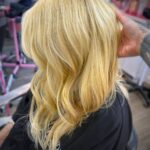
Quick answer: How to use purple shampoo comes down to three things: use it once or twice a week, leave it on for a few minutes, and follow with conditioner. Purple shampoo neutralizes yellow tones in blonde, highlighted, and gray hair. For bronde and brunette hair that pulls orange, blue shampoo does the same job for warmer tones. Either one only tones. Neither lightens hair, fixes uneven color, or replaces a salon toner.
Purple shampoo has a reputation problem. Half the people who use it swear by it, and the other half are left with a lilac-tinged, rough, dull blonde that they blame on the bottle. Both groups are using the same product. The difference is almost always how it’s used, how often, and whether it was the right tool for the problem to begin with. And if your color is closer to bronde than blonde, the right tool may not be purple at all.
What Does Purple Shampoo Actually Do?
Purple sits directly opposite yellow on the color wheel, and opposite colors cancel each other out. Purple shampoo leaves a small amount of violet pigment on the hair each time you wash, which neutralizes the yellow tones that creep into lightened hair. The effect is gentle and temporary, which is the point: it keeps a salon tone looking fresh between appointments rather than changing your color.
That also defines its limits. Purple shampoo doesn’t lighten hair, doesn’t lift pigment, and doesn’t correct a color that was never toned properly. It maintains a good result. It doesn’t create one.
Why Does Blonde Hair Turn Yellow or Brassy in the First Place?
When hair is lightened, it passes through warm stages, and a toner is what neutralizes that underlying warmth and sets your final shade. Toner is temporary, so it fades. As it does, the warmth underneath starts to show, and the blonde drifts toward yellow or brassy.
Several things speed that up:
- Porosity. Lightened hair is more porous, so it loses toner faster and also grabs onto anything in your water or products.
- Mineral and product buildup, which can leave hair looking dull and off-tone.
- Sun and chlorine, which both fade and shift tone.
- Heat styling, which can warm the tone of lightened hair over time.
- Frequent washing with harsh shampoos, which strips toner and pigment faster.
How Often Should You Use Purple Shampoo?
For most blondes, once or twice a week is the sweet spot. Start with once a week and see how your hair responds. You can increase from there if yellow tones keep showing up, and cut back if your blonde starts looking dull or cool.
A few adjustments are worth knowing:
- Very light or platinum hair picks up pigment fast and shows it, so you may only need it every week or two.
- Warm, golden, or honey blondes may not want to neutralize much at all, since the warmth is part of the look.
- Highly porous hair grabs pigment quickly, so use it less often or for less time.
On the other days, use a color-safe, sulfate-free shampoo so you’re not stripping your toner faster than purple shampoo can protect it.
How Long Should You Leave Purple Shampoo In?
Follow the label first, since formulas vary in strength. As a general rule, most are left on for a few minutes. If you’re new to it, start with one or two minutes and extend the time gradually. Leaving a strong formula on too long, especially on very light or porous hair, is the most common cause of a lilac or gray cast.
How to Use Purple Shampoo Properly, Step by Step
- Wet your hair thoroughly. Soaking wet hair spreads pigment more evenly and reduces the chance of patchy results.
- Concentrate on the brassiest areas. That’s usually the mid-lengths, ends, and face-framing pieces, which are the oldest and most porous parts of your hair.
- Work it through gently, without scrubbing, until it lathers evenly.
- Leave it on for the time on the label, starting short.
- Rinse thoroughly, then follow with conditioner or a mask, since many toning shampoos are drying.
Wear gloves if your hands stain easily, and rinse the shower afterward, because pigment can mark tile and grout.
Should You Use Purple Shampoo or Blue Shampoo?
This is the question most people skip, and it explains a lot of disappointing results. The two products fix different problems:
- Purple shampoo neutralizes yellow. It’s the right choice for blonde, highlighted, platinum, and gray or silver hair.
- Blue shampoo neutralizes orange. It’s the better choice for bronde, brunettes with lightened pieces, balayage on a dark base, and darker blondes that have warmed up.
If your hair is more orange than yellow and purple shampoo isn’t doing much, that’s usually why. And if you’re a brunette with a base that was never lightened, neither one will do anything noticeable, because there’s no lifted warmth to neutralize.
What’s the Best Shampoo Routine for Bronde and Brunette Hair?
Bronde sits between blonde and brunette: dimensional, lived-in, and deliberately warm and rich rather than icy. That changes the approach. The goal isn’t to cool everything down, because too much toning can flatten the depth that makes bronde look natural. It’s to keep the lighter pieces from pulling orange.
- Most washes: a color-safe, sulfate-free shampoo and conditioner.
- About once a week: a blue shampoo, only if orange or brassy tones are showing in the lighter pieces. Lightened sections on a dark base warm up gradually, so a lighter hand works better than frequent use.
- Every four to eight weeks: a professional gloss, which re-neutralizes warmth and restores richness and shine in a way no shampoo can.
- Weekly: a deep conditioning mask to keep lightened pieces from drying out and looking dull.
If you’re not sure whether your tone needs blue, purple, or neither, your stylist can tell at a glance, and that’s a quick conversation at any appointment.
Why Is My Hair Still Brassy Even With Purple Shampoo?
- The tone is orange, not yellow. Purple can’t cancel orange. Blue can, or a salon toner.
- Your toner has fully faded. Purple shampoo extends a toner. It can’t replace one that’s gone.
- The hair wasn’t lifted far enough. If there’s still too much warm pigment, no shampoo will fully neutralize it.
- Buildup is dulling the tone. A clarifying wash occasionally can help, and a shower filter is worth considering if mineral buildup is a problem for you.
- Sun, chlorine, or heat are re-warming the tone faster than you can neutralize it.
If you’re still seeing orange or yellow after you’ve tried the fixes above, it’s time to let a stylist take a look. Persistent brassiness is one of the signs covered in when it’s time to call a pro for color correction, and often it’s as simple as a fresh gloss.
Can Purple Shampoo Damage Your Hair?
On its own, no. The pigment isn’t harmful. The trouble is that many purple shampoos are fairly cleansing, and using them too often can leave hair feeling dry and rough, especially on lightened hair that’s already porous. Overuse can also build up so much pigment that blonde turns dull, gray, or faintly lavender.
The fix is simple. Use it only as often as you need it, condition well afterward, and add a weekly deep conditioning mask. That matters even more in winter, when dry air and indoor heat are already working against moisture.
What Can’t Purple Shampoo Do?
- It can’t lighten your hair or make a blonde brighter than it is.
- It can’t fix uneven lift, patchy color, or a tone that was never properly toned.
- It can’t replace a professional toner or gloss, which resets your tone from the start.
- It can’t repair damage. It’s a color product, not a treatment.
For most blondes, the real maintenance plan is a salon toner or gloss every four to eight weeks, with purple shampoo bridging the gap in between. The full maintenance routine, including how to space everything out, is in the blonde hair maintenance checklist.
What Does a Simple Blonde Routine Look Like?
- Most washes: a color-safe, sulfate-free shampoo and conditioner, washing two to three times a week rather than daily if you can.
- Once or twice a week: swap in purple shampoo.
- Weekly: a deep conditioning or bond-building mask.
- Every time you heat style: a heat protectant.
- Every four to eight weeks: a professional gloss or toner to reset the tone.
When Should You Skip Purple Shampoo?
- Right after a fresh toner. The salon tone is doing the work, and adding pigment on top can overtone it.
- If your blonde already looks cool, ashy, or flat.
- If you prefer a warm, golden, or honey blonde, or a rich, warm bronde.
- If your hair is dark and has never been lightened, since it won’t have any effect.
Frequently Asked Questions
How often should you use purple shampoo?
Most people do well using it once or twice a week, alternating with a color-safe, sulfate-free shampoo. Very light or porous hair may need it less often.
Does purple shampoo work on brown or dark hair?
Not on its own. Purple neutralizes yellow, but brassiness on brown or bronde hair is usually orange, which needs a blue shampoo or a salon toner instead.
What shampoo should you use for bronde hair?
Use a color-safe, sulfate-free shampoo for most washes, and a blue shampoo about once a week only if orange or brassy tones show up in the lighter pieces. Too much purple can flatten the richness that makes bronde look natural.
Can you use purple shampoo every day?
It isn’t recommended. Daily use can dry out your hair and build up enough pigment to leave blonde looking dull, gray, or lavender.
Does purple shampoo fix orange hair?
No. Purple cancels yellow, not orange. Orange tones call for blue shampoo or a professional gloss, and persistent orange usually means a stylist should take a look.
Final Thoughts
Purple shampoo is a maintenance tool, and a good one when it’s matched to the right problem. For blondes, that’s yellow and purple. For bronde and brunette, it’s usually orange and blue. Use it sparingly, leave it on for a short, controlled time, and pair it with real conditioning. When your color stops responding, that usually isn’t a sign to use more. It’s a sign your toner or gloss is overdue.
Not sure whether you need purple, blue, or a fresh toner? Start with a personalized hair consultation and we’ll tell you what your hair actually needs, or book your next appointment.
Helpful Resources
- American Academy of Dermatology — Healthy Hair Tips
- American Academy of Dermatology — Coloring and Perming Tips