If you have ever scrolled through haircut inspiration and wondered why some cuts look soft, airy, and a little undone while others look sharp and structured, the tool in the stylist’s hand is often part of the answer. Razor cut hair has a reputation as the secret behind that effortless movement. It also has a reputation as the cause of frizz and fraying. Both reputations are earned, and the difference comes down to who is holding the blade, what condition your hair is in, and whether razor cutting is the right technique for your texture in the first place.
At Blonde and Bronde Salon on Newbury Street, precision cutting and razor cutting are both part of how we shape hair, so we would rather you know exactly what a razor does before you ask for one. Here is the honest version: what a razor cut really is, who it flatters, who should skip it, and what to ask before you sit down in the chair.
What is a razor cut?
A razor cut is exactly what it sounds like. Instead of closing a pair of shears on a section of hair, the stylist glides a blade across it. Shears slice straight through, so the ends come out blunt and even. A razor works at an angle, so each strand finishes in a fine taper rather than a flat edge. Because the stylist can taper strands at different lengths, the ends of the haircut feel feathered, light, and mobile instead of heavy and blocky.
That is why razor cutting has become shorthand for movement. It removes bulk without taking away length, softens harsh lines, and gives hair an airy finish that is hard to achieve any other way. It also explains the technique’s bad reputation. A tapered end is a more delicate end, so the margin for error is smaller than it is with scissors.
Razor cutting is also not a style. It is a tool. A razor can build a long layered cut, a soft lob, a cropped shape, or a textured fringe. What changes is how the ends behave: softer, lighter, and a little less forgiving if the hair or the technique is not right for it.
How is a razor cut different from a scissor cut?
The simplest way to compare them is to look at the ends and the weight. Scissors leave a clean, blunt edge and keep all of the density in the hair. A razor leaves a tapered edge and takes some density with it. Neither tool is better. They solve different problems.
| Razor cut | Scissor cut | |
| Ends | Tapered, soft, feathered | Blunt, clean, defined |
| Weight | Removes bulk easily | Keeps density intact |
| Overall look | Airy, textured, full of movement | Structured, polished, crisp lines |
| Grow-out | Soft and blended | Can show a defined line as it grows |
| Usually best for | Thick to medium hair, straight to wavy | Fine, very curly, or damaged hair |
| How it is done | On wet hair, with a fresh blade | Wet or dry |
In practice, most good haircuts are not one or the other. Our long and short haircut services both pair precision cutting, which builds clean structure and a seamless shape, with razor work where it helps, which removes bulk and adds texture. A common approach across the industry is to set the perimeter with scissors for a solid foundation and use the razor through the interior for movement.
Who is a razor cut best for?
A razor cut tends to look its best on hair that has enough density to spare and enough health to handle a tapered end. In general, that means:
- Thick or dense hair. Weight removal is the razor’s strongest talent. Heavy hair that feels like a block gets lighter and starts to move.
- Straight to loosely wavy hair. These textures show off the feathered, airy finish most clearly.
- Short cuts that risk looking boxy. Bobs, lobs, and crops can feel stiff when every line is blunt. A razor breaks those lines up.
- Long layers that need to stay light. Without some weight removal, long layers can look heavy or flat. A razor keeps them airy.
- Healthy, intact ends. A tapered end needs a sound strand underneath it.
If that list sounds like your hair, razor cutting is probably worth asking about. If it does not, keep reading, because the next section matters more.
Who should skip a razor cut, or ask for a modified version?
Razor cutting is not a universal upgrade. There are a few situations where most stylists, including us, will steer you toward scissors or a much lighter touch:
- Curly, coily, or very frizz-prone hair. These textures already have a raised, open cuticle. A razor can roughen it further and push hair toward frizz along the shaft, not just at the ends.
- Damaged, over-processed, or split-end-heavy hair. A tapered end on a strand that is already fragile can fray faster. Healthy ends first, texture second.
- Very fine hair. Fine hair has little density to spare, and a razor removes density. Overdone, the ends can look wispy. When a razor is used on fine hair at all, it is usually used sparingly on the surface layers while the perimeter stays scissor-cut to keep the shape looking full.
- Hair you plan to perm. The tapered ends are difficult to wrap around perm rods.
There is one nuance worth knowing. Some experienced stylists do use a razor on thick curly hair, but in a targeted way, such as thinning out volume underneath the top layers. That is an advanced, selective use of the tool, not a default setting, and it is a good example of why the stylist matters more than the technique.
Does a razor cut damage your hair?
Not inherently. When razor cut hair looks frizzy or frayed, the cause is almost always technique or a mismatch with the hair type, not the razor itself. Razor cutting is generally done on wet hair, because dry hair can drag against the blade, leaving split ends and frizz and making the cut uncomfortable. It also needs a fresh, sharp blade, since a dull one pulls instead of slicing. And it needs a low, controlled angle, because pulling on the hair or pressing too hard roughens the cuticle.
Over-feathering is the other common culprit. A stylist who takes too much off the ends can leave hair looking thin and fuzzy rather than soft. The takeaway is simple: a razor cut done well should leave ends that look soft and weightless within a few days. If a razor cut leaves you with fuzzy, frizzy ends, that is a sign the technique and your hair were not a good match.
Is razor cutting safe for blonde, highlighted, or color-treated hair?
This is a question we take seriously, because blonding is what our salon is built around. Lightened hair tends to be more porous and more delicate than virgin hair, so any technique that roughens the cuticle deserves extra thought.
The answer depends on how healthy your hair is after lightening. On strong, well-maintained blonde or balayaged hair, razor cutting can add beautiful softness and keep dimensional color looking airy. On hair that is stretched thin from repeated lightening, a stylist may keep the perimeter scissor-cut, use the razor only where the hair is strongest, or hold off until the hair has recovered. That is a judgment call that depends on seeing and feeling your hair in person, and it is one more reason color history and cutting plans belong in the same conversation.
What does a razor cut look like on long hair versus short hair?
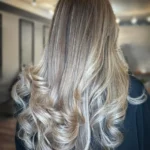
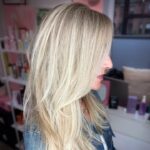
On long hair, a razor is mostly about keeping length from looking heavy. It softens layers, builds face-framing pieces that blend rather than chop, and removes bulk from thick ends so the hair swings instead of sitting in a heavy line. Our long haircut service covers every cutting technique for lengths below the ear, using both precision and razor cutting to fit your texture, density, and goals, whether that is soft layers, face-framing, or a clean blunt finish.
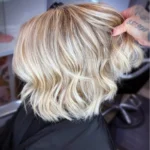
On short hair, the razor does a different job. Bobs, lobs, and cropped cuts can look boxy or stiff when every edge is blunt, and a razor breaks up those heavy lines so the shape collapses naturally and looks fresh instead of rigid. This is where razor cutting does its best work on thick or dense hair. Our short haircut service covers lengths above the ear and is built around the same idea: structure from precision cutting, texture and movement from the razor.
How do you style and maintain a razor cut?
Razor cut hair is designed to look effortless, so styling does not need to be complicated. A few habits help it keep its shape:
- Work with the texture. Finger-styling, a light blow-dry, or air-drying with a touch of product usually shows off a razor cut better than a heavy, brushed-out finish.
- Go easy on the brush. Over-brushing tapered ends can encourage fuzz. A wide-tooth comb is gentler.
- Protect and smooth the ends. A lightweight cream or oil through the ends and a heat protectant before hot tools help keep tapered ends looking soft rather than frayed.
- Keep up with trims. Because the shape depends on light, tapered ends, many clients refresh their cut every six to eight weeks, though the right timing depends on your hair and the length of the cut.
What should you ask your stylist before a razor cut?
A good stylist will welcome questions, and the answers tell you quickly whether razor cutting is the right call for your hair. Before you commit, consider asking:
- Will you cut my hair wet, with a fresh blade?
- Where will you remove weight, and where will you keep it?
- Will the perimeter be cut with the razor or with scissors?
- How will this grow out on my hair type?
- How should I style it at home to get the same look?
If you are not sure razor cutting suits your texture, a personalized in-person consultation is the place to find out. During a personalized hair consultation, your stylist reviews your hair history and goals and assesses your hair’s condition, texture, and density, which are the three things that decide whether a razor will help or hurt.
How do you find a stylist who actually knows how to razor cut?
Razor cutting is a skill that takes real training, and it is easy to tell when it is missing. Look for a stylist who can explain which technique they plan to use where, and why. Ask to see examples of their work on hair like yours. Be cautious of anyone who recommends a razor for every hair type without a single qualification, because the technique should be matched to the hair, not the other way around.
Our founder, Leslie Shattuck, is trained in both precision and razor cutting techniques, including the Pyrametrics system developed by stylist John Dellaria. You can read more about her background and the rest of the team on our about page.
Frequently Asked Questions About Razor Cut Hair
Is a razor cut good for fine or thin hair?
Usually only in small doses. A razor removes density, and fine hair has little to spare, so heavy razor work can leave the ends looking wispy. When a razor is used on fine hair, it is typically used lightly on the surface layers, while the perimeter is cut with scissors to keep the shape looking full.
Can you get a razor cut on curly hair?
For most curly and coily hair, scissors are the safer choice, because a razor can roughen an already open cuticle and increase frizz. Some stylists use a razor in a limited way on thick curly hair to reduce volume underneath the top layers, but that is a targeted technique rather than a default.
Does a razor cut make hair look thicker or thinner?
A razor cut removes weight, so on thick or dense hair it makes the cut look lighter and easier to manage. On fine hair it can make the ends look thinner if it is overdone, although used sparingly it can also add lift and texture.
Can a razor cut be done on dry hair?
Razor cutting is generally done on wet hair. A razor can drag on dry hair, which can lead to split ends, frizz, and an uncomfortable cut.
What is the difference between precision cutting and razor cutting?
Precision cutting creates clean, seamless structure, while razor cutting removes bulk and adds airy texture and movement. At Blonde and Bronde Salon, the two are often combined so a cut has both a solid shape and a soft, natural finish.
Do I need to book extra time if I’m getting a haircut with color?
Yes. When you combine a haircut with another service such as color or keratin, select the “Add On” timing option. If the haircut is your only service, select the full time when booking.
The bottom line on razor cut hair
Razor cutting is one of the best tools a stylist has for turning heavy, blunt hair into something that moves, and one of the easiest to get wrong on the wrong texture. Thick to medium, straight to wavy, healthy hair tends to love it. Curly, damaged, or very fine hair usually calls for scissors or a very light hand. Whichever technique you land on, the goal is the same: a cut that looks polished on day one and grows out beautifully. Ready to find the right shape for your hair? Use the Book Now button at the top of the page to reserve your visit at our Newbury Street salon in Boston’s Back Bay.