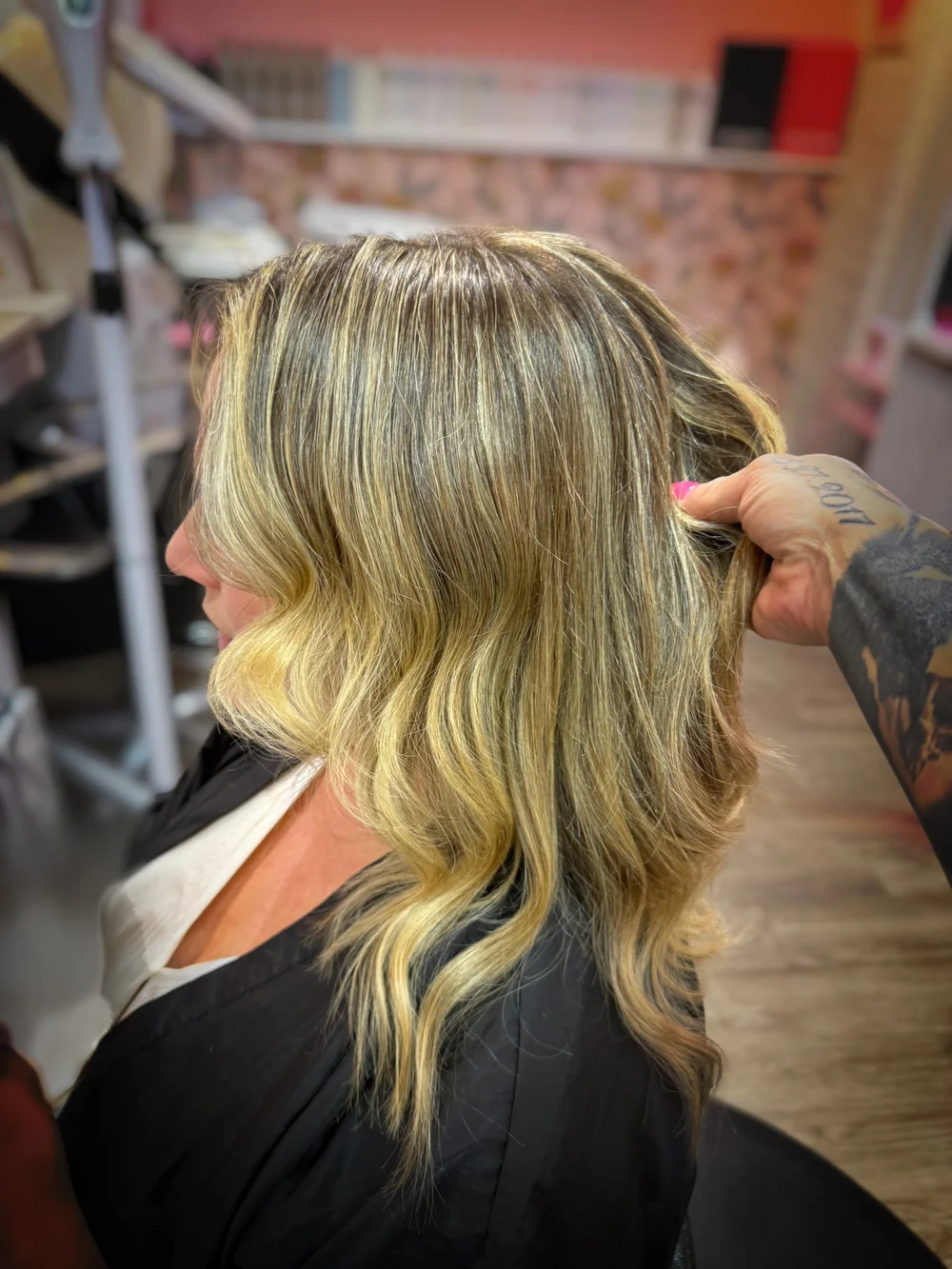
Quick answer: Hair that’s healthy enough to lighten safely will stretch slightly when wet and spring back without snapping, feel smooth rather than gummy or straw-like, and has no more than one or two rounds of previous chemical lightening in its recent history. If your hair snaps easily, feels mushy when wet, or has been bleached multiple times without recovery time in between, it needs strengthening before any new lightening service.
Balayage, foilyage, and double process color all rely on the same basic chemistry: lightener has to break down bonds inside the hair to lift color out. That’s not a flaw in the process, it’s how lifting works. But it also means the condition your hair is in before you sit in the chair directly determines how safely — and how successfully — it can handle going lighter. Here’s how to actually check, instead of just hoping for the best.
What Actually Determines Whether Hair Can Handle Lightening?
Three things matter most: how much chemical processing your hair has already been through, how it’s currently responding to stress (heat, brushing, everyday wear), and its elasticity — its ability to stretch and return to shape without breaking. Hair that’s already lost a lot of internal strength from past processing has less room to safely absorb another round of lightener, regardless of how careful the technique is.
How Do You Test Your Hair’s Elasticity at Home?
This is the simplest way to get a real read on your hair’s condition before booking anything:
- Take a small, clean section of wet hair.
- Hold it gently between two fingers near the root to avoid pulling from the scalp.
- Stretch it gently and watch how it responds.
Healthy hair stretches a bit and springs back to its original length once released. Hair that stretches excessively and stays stretched, feels gummy or mushy while wet, or snaps with very little tension is showing signs of compromised elasticity — and that’s exactly the kind of hair that struggles most with additional lightening.
What Are the Warning Signs Your Hair Isn’t Ready?
- It snaps easily, even during normal brushing or styling, not just during the stretch test.
- It feels gummy or mushy when wet rather than smooth and resilient.
- It won’t hold a curl or style the way it used to, even with the same products and tools.
- It looks dull no matter what you do, since damaged cuticle doesn’t reflect light the way healthy hair does.
- You’ve noticed more breakage than usual around your brush, pillow, or shower drain.
Does Your Color History Actually Matter That Much?
Yes — more than most people expect. Each round of lightening removes a portion of your hair’s internal strength, and that damage is cumulative rather than something that fully resets between appointments. Hair that’s been lightened once and given time to recover behaves very differently under a new lightening service than hair that’s been bleached repeatedly in a short window. This is part of why an honest conversation about your color history matters just as much as the technique your stylist chooses.
What If You’ve Bleached Your Hair at Home Before?
At-home bleach is one of the most common reasons hair isn’t ready for a professional lightening service, since box products aren’t formulated with the same precision or built-in conditioning agents professional lighteners use. If that’s part of your hair’s history, it’s worth having your hair properly assessed before booking anything — this is often exactly what a color correction conversation is built around, resetting hair safely before moving forward with a new color goal.
How Many Levels Can Hair Safely Lift in One Appointment?
There’s no single number that applies to everyone, since it depends entirely on your hair’s current condition, not just its starting color. Hair in strong condition can often handle a bigger lift in one visit than hair that’s already stressed, even if the starting shade looks the same. This is exactly why a proper consultation matters more than a quick guess based on a photo — your stylist needs to physically assess your hair, not just hear your goal.
What Can You Do to Prepare Your Hair Before a Lightening Appointment?
- Cut back on heat styling in the weeks leading up to your appointment
- Add a weekly deep conditioning or protein treatment if your hair has felt weaker than usual
- Be fully honest about your color history, including any box dye or at-home bleach
- Avoid chlorine and prolonged sun exposure right before your appointment when possible
- If your hair fails the elasticity test, consider a strengthening period before booking a major lightening service rather than pushing ahead anyway
What Happens If You Lighten Hair That Isn’t Ready?
The lightener still processes, but the results are far less predictable — increased breakage, gummy or straw-like texture, uneven color uptake, and tone that fades or shifts faster than it should. This is usually where the story ends up needing a correction rather than a simple refresh, which takes more time and more appointments than doing the assessment properly up front would have. A good stylist will tell you honestly if your hair needs more time before pushing ahead with a bigger lightening goal — that’s not them being overly cautious, it’s them protecting the result you actually want.
If you’re not sure where your hair currently stands, that’s exactly what a personalized hair consultation is for — a hands-on assessment before any formula or foil touches your hair.
Frequently Asked Questions
How do I know if my hair is too damaged for balayage?
If it snaps easily, feels gummy when wet, or has been bleached multiple times recently without recovery, it likely needs strengthening before a new lightening service. A stylist can confirm this with a hands-on assessment.
Can damaged hair still be lightened safely?
Sometimes, but usually with adjustments — a smaller lift, added bond-building steps, or a staged approach over multiple appointments rather than one dramatic change.
How long should I wait between lightening sessions if my hair needs to recover?
This varies by how compromised the hair is, but giving hair real recovery time between chemical services, rather than stacking appointments close together, is one of the biggest factors in long-term hair health.
Does the elasticity test replace a professional consultation?
No — it’s a useful first check you can do at home, but a stylist can assess multiple areas of your head and factor in your full color history in a way a single at-home test can’t.
Final Thoughts
Going lighter is one of the most rewarding transformations hair can go through, but it only works well when the hair underneath is actually ready for it. A quick elasticity check and an honest look at your color history can tell you a lot before you ever book an appointment — and save you from a result that needs correcting later.
Not sure where your hair currently stands? Book a consultation and get a real assessment before any lightening begins.