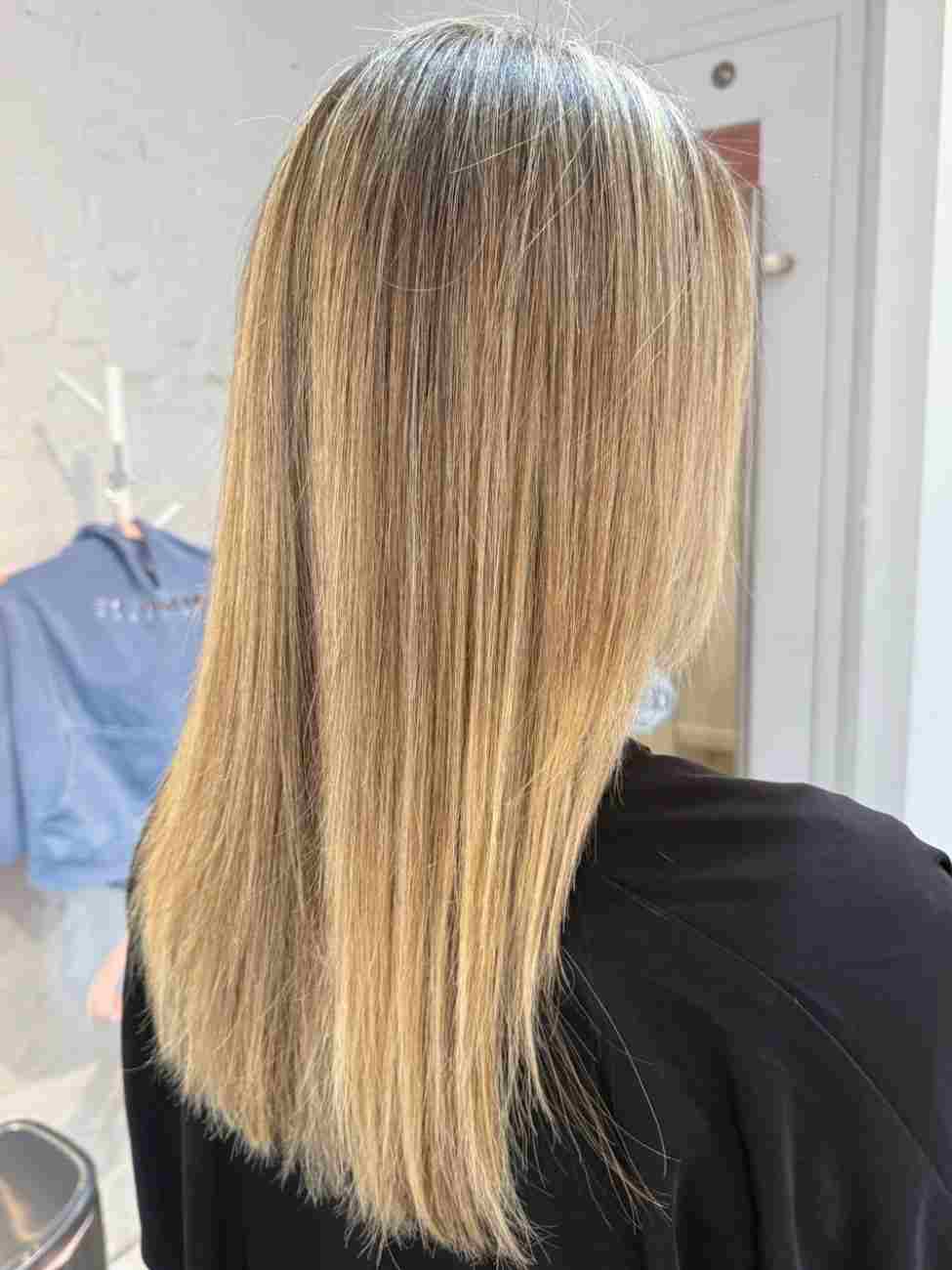
Quick answer: Hair color and keratin pricing in Boston varies more than almost any other salon service, because the final cost depends on your starting hair, your target result, and how much processing time it takes — not a flat menu price. This guide breaks down exactly what drives the cost up or down for balayage, foils, keratin treatments, and color correction, so you know what to expect and what questions to ask before you book.
If you’ve searched “how much does keratin treatment cost” or “balayage price Boston” and landed on a page with a single flat number, be skeptical of it. Hair services are one of the few things where an honest salon usually can’t give you an exact price without seeing your hair first — and understanding why makes the whole booking process a lot less confusing.
Why Hair Color and Keratin Pricing Isn’t a Flat Rate
Unlike a haircut, which takes roughly the same time and product regardless of who’s in the chair, color and smoothing services scale directly with three things: how much hair you have, how much correction or lift it needs, and how much product it takes to get there. A stylist quoting the same flat price to someone with waist-length, previously-bleached hair and someone with a short, healthy bob isn’t pricing either of them accurately.
That’s why most reputable salons – Blonde and Bronde Salon included, price color and keratin services after an in-person consultation rather than off a fixed menu. It’s not evasiveness; it’s the only way to give you a number that actually reflects your hair.
What Actually Drives the Cost Up or Down
Hair length and density. More hair means more product and more processing time, full stop. A full foil highlight on long, thick hair will always cost more than the same service on short, fine hair.
Your starting color versus your target color. This is the single biggest cost factor for lightening services. Going from a level 6 brown to a level 8 blonde is a much smaller lift than going from black to platinum — and the latter often requires multiple sessions to protect hair health, which changes the total cost significantly.
Technique. Hand-painted techniques like balayage are generally less labor-intensive than foil-based services, since foils require more precise sectioning and more product per section. Adding foil to a hand-painted base — the approach behind foilyage — pushes both the time and the cost up a step further, since it combines the painting process with the extra lift foils provide.
Whether it’s maintenance or correction. A routine toning refresh on healthy, already-blonde hair costs far less than a full color correction fixing a box-dye mistake or years of uneven color. Correction work often needs multiple steps in a single appointment — clarifying, lightening, toning — each of which adds time.
Keratin treatment type. A full Cezanne Classic treatment is a longer, more involved service than an express keratin smoothing treatment, and the difference in longevity (typically 4–5 months for classic versus 6–8 weeks for express) is reflected in the price difference between them.
Add-on services. Toning, glossing, and bond-repair treatments are often priced separately from the base color service, since not every client needs or wants them.
What Keratin Treatments Actually Cost at Blonde & Bronde
Since keratin pricing is one of the clearest examples of the classic-vs-express tradeoff, here’s what it actually looks like:
Classic Keratin (Cezanne) Treatment — starts at $420, runs 135+ minutes. Includes consultation, keratin application, and a professional finish, with results lasting up to 5 months. 3 oz of product is included; additional product is $60 per oz for longer or thicker hair.
Express Keratin (Cezanne) Treatment — starts at $280, runs 75 minutes. Same consultation-and-application process, with results lasting up to 2 months. 1 oz of product is included; additional product is $60 per oz. New clients need a $50 deposit to book.
The price difference between the two comes down almost entirely to longevity and processing time: the classic treatment costs more upfront but lasts roughly 2.5x longer, which is worth running the math on if you’re deciding between them. If you get a keratin treatment three times a year on the express schedule versus once or twice a year on the classic schedule, the annual cost ends up closer than the per-visit price suggests — it becomes a question of how much upkeep and how frequently you want to be in the chair, more than a straightforward “cheaper option.”
Ballpark Ranges for Everything Else
How to Get an Accurate Quote (Without Wasting a Trip)
A few things speed this up and make sure the quote you get is actually accurate:
Bring or send inspiration photos, ideally more than one, so your stylist can see the range of what you’re picturing. Be upfront about your color history — box dye, previous salon color, keratin, or any chemical treatments in the last year all affect pricing and processing. Mention your maintenance tolerance; a low-maintenance grow-out and a high-contrast bright blonde are priced and planned differently even if the starting point looks similar. If you’re comparing salons, ask what’s included in the quoted price — toner, gloss, and finishing treatments are sometimes bundled and sometimes billed separately, and that’s where quotes can look different for the same actual service.
Why “Cheapest” Isn’t the Same as “Best Value” for Color
This is worth saying directly: a much cheaper quote for the same service usually means less time, less product, or less experience going into your hair — not a better deal. Color and keratin services are one of the few areas where under-pricing is a warning sign rather than a bargain, since rushed lightening or an inexperienced formulation is exactly how color correction cases happen in the first place. A slightly higher price that includes a proper consultation, quality products, and the time to do the service right is usually the actual better value once you account for how long the result lasts and whether it needs fixing later.
Budgeting for the Full Year, Not Just the First Appointment
One thing that catches first-time clients off guard isn’t the initial price — it’s realizing that color and keratin services aren’t usually a one-time cost. Blonde in particular requires ongoing upkeep: toning refreshes to keep brassiness in check, root touch-ups as regrowth becomes visible, and periodic deep conditioning or bond-repair treatments to keep lightened hair healthy. Keratin treatments have a built-in expiration date too, whether that’s 6–8 weeks for an express service or 4–5 months for a full classic treatment, after which you’re back in the chair if you want to maintain the result.
When you’re comparing the true cost of a color or keratin service, it’s worth thinking in terms of the full year rather than just the first visit. A lower-maintenance technique like balayage, which might need touch-ups only every 10–14 weeks, can end up being more cost-effective over a year than a higher-maintenance full foil service requiring visits every 6–8 weeks — even if the full foil service itself isn’t dramatically more expensive per appointment. A good stylist will walk you through this at your consultation, since it affects not just your budget but which technique actually makes sense for your lifestyle.
Why Boston Pricing Tends to Run Higher Than Some Other Markets
If you’ve priced color services in a few different cities, you may have noticed Boston tends to sit above the national average — and there are real reasons for that beyond just cost of living. Boston has a dense concentration of highly trained colorists, many with specialized certifications in techniques like balayage, foilyage, and corrective color, and that level of specialization is reflected in pricing citywide. Newbury Street specifically, being one of the most established beauty corridors in the city, tends to price toward the higher end of that range, in line with the experience level and product quality typical of salons in the area.
This doesn’t mean higher price automatically means better results everywhere — but it does mean that comparing a Boston quote directly to a quote from a lower cost-of-living market usually isn’t an apples-to-apples comparison. The relevant comparison is other specialized colorists within the Boston market, not national averages.
Pricing FAQ
Why can’t I get an exact price over the phone?
Because color and keratin pricing depends on things a stylist can only assess by seeing your hair in person, length, density, current color, and condition all affect the final price, and guessing at any of them risks quoting you something inaccurate.
Is a consultation the same as a quote?
Usually yes, most salons combine them into one appointment, where the stylist examines your hair, discusses your goals, and gives you a specific price based on what they see.
Why do some quotes include toner and others don’t?
Salons vary in what’s bundled into a base service price. Always ask directly whether toning, gloss, or finishing treatments are included, since that’s the most common reason two quotes for “the same service” look different.
How much does a keratin treatment actually cost?
At Blonde and Bronde Salon, the Classic Keratin (Cezanne) Treatment starts at $420 for 3 oz of product and lasts up to 5 months. The Express Keratin (Cezanne) Treatment starts at $280 for 1 oz and lasts up to 2 months. Additional product beyond what’s included is $60 per oz for either option.
Does correction work always cost more than a regular color service?
Generally yes, because correction often requires multiple steps — clarifying, lightening, neutralizing, toning — in a single visit, and sometimes needs a second appointment to finish safely without damaging the hair.
Will a stylist tell me if my goal isn’t realistic in one session?
A good one will. If reaching your target color in a single appointment risks your hair’s health, an experienced colorist will recommend spacing it across two or more sessions rather than pushing for a dramatic one-time result, and will explain the pricing for that plan upfront.
Final Thoughts
Hair color and keratin pricing looks confusing from the outside, but it comes down to a short list of real factors: how much hair, how much change, and how much time. The best way to get an honest number isn’t to hunt for a flat rate online, it’s to book a consultation with a stylist who will look at your actual hair and tell you exactly what it will take.
Book your consultation at Blonde and Bronde Salon on Newbury Street to get pricing that’s actually accurate for your hair.