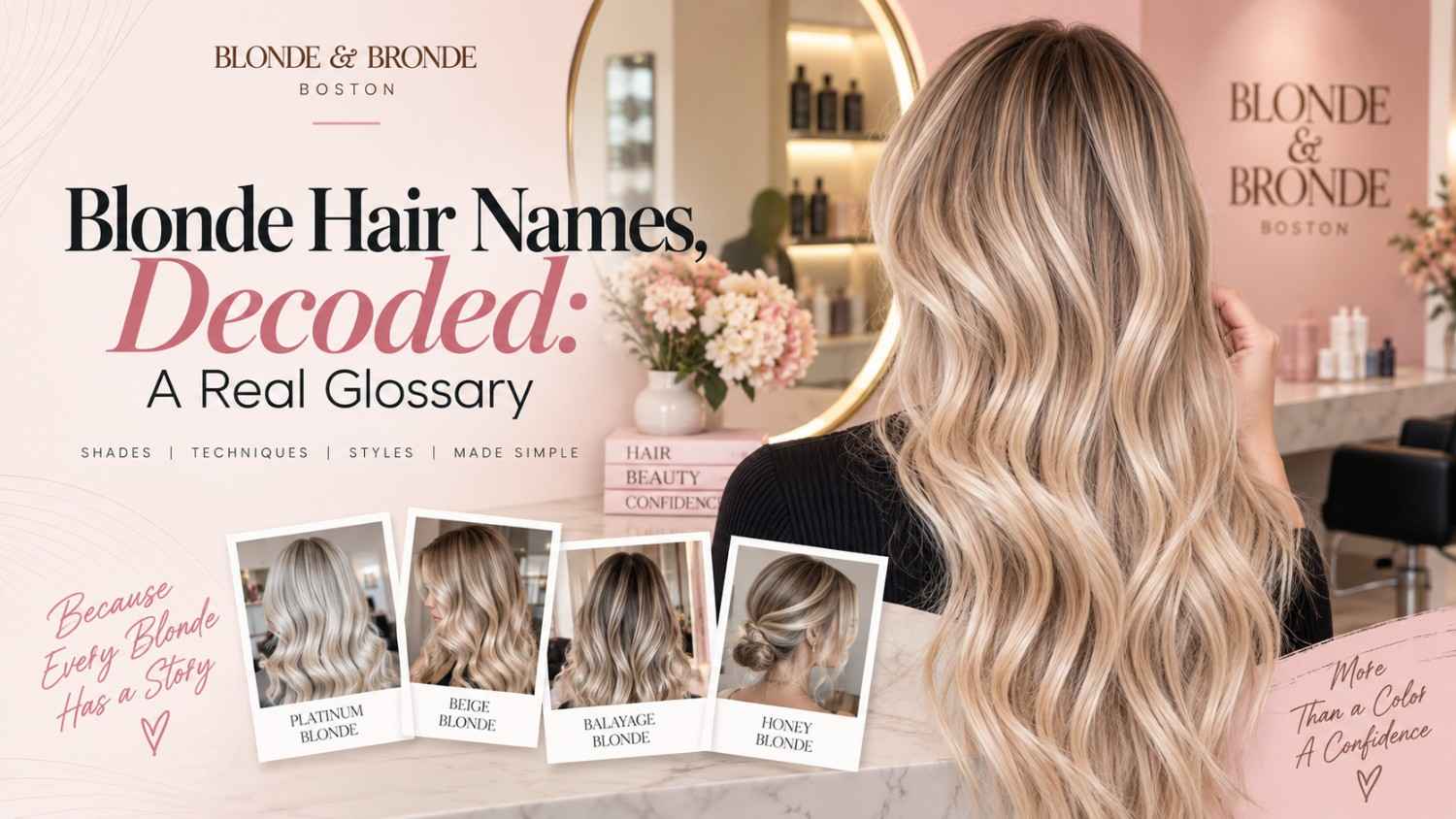
Quick answer: Most blonde trend names describe tone and maintenance style, not a brand-new technique. Bronde blends brown and blonde, butter blonde leans warm and creamy, old money blonde is soft and understated, and recession blonde is built to stretch between appointments. Nearly all of them are achieved with the same core techniques – balayage, foilyage, or a gloss – just placed and toned differently.
Every blonde name that shows up on social media sounds like a brand-new invention, but most of them are variations on the same handful of techniques with a different tone or maintenance goal attached. Here’s what each one actually means, so you can walk into a consultation with the right words instead of just a screenshot.
Bronde
A blend of brown and blonde – dimensional color that sits between the two rather than committing fully to either. It’s popular because it photographs as rich and natural rather than flat, and it tends to grow out more gracefully than a full blonde since the base color isn’t dramatically different from most natural brunette shades. See What Is Bronde?! for the full breakdown of how it’s achieved.
Butter Blonde
A warm, creamy blonde with a slightly yellow undertone – think melted butter rather than pale vanilla. It’s one of the warmest blonde shades on the spectrum and tends to suit warmer skin tones especially well, since the tone itself leans golden rather than ash.
Old Money Blonde
A soft, natural-looking blonde built around subtlety – buttery tones, low-contrast money pieces, and a root that blends rather than contrasts sharply. The name refers to an aesthetic (understated, heritage-style luxury) rather than a specific formula.
Recession Blonde
Less about tone and more about maintenance – a blonde planned specifically to stretch as long as possible between salon visits, usually through root smudging and strategic placement rather than a uniform, high-upkeep application.
Lived-In Blonde
A general term for blonde that looks like it’s been there for a while rather than fresh out of the salon – soft, blended, with no harsh lines. Most of the names above (bronde, old money blonde, recession blonde) all fall under this broader umbrella; “lived-in” is less a specific shade and more a description of how well the color blends and grows out.
Honey Blonde
A golden, amber-toned blonde, slightly deeper and warmer than butter blonde. It reads as rich rather than pale, and tends to work well on medium to dark blonde or light brunette bases without requiring dramatic lightening.
Ice Queen / Icy Blonde
The opposite end of the spectrum from butter and honey – a cool, ash-toned blonde with little to no warmth. This shade requires the most upkeep of the group, since any warmth creeping back in as color fades will show quickly against such a cool base.
How Do You Know Which Name Actually Fits Your Goal?
Names are a starting point for a conversation, not a formula a stylist can follow exactly – the same words can mean slightly different things depending on who’s using them. The most reliable approach is bringing photos that show tone clearly (not just placement), and being upfront about your current color and how much maintenance you’re realistically willing to commit to. A personalized hair consultation is where a specific trend name actually gets translated into a formula that works on your hair.
Do These Names Affect Cost or Time?
Not directly – the name itself doesn’t change pricing, but the underlying technique does. A dramatic lift for icy blonde takes longer and costs more than a subtle bronde shift on hair that’s already close to that tone. What matters for planning is less the trend name and more how much actual change your hair needs to get there.
Frequently Asked Questions
Is bronde the same as old money blonde?
No – bronde describes a brown-blonde blend, while old money blonde describes a specific soft, buttery aesthetic that can be achieved on a range of base tones, including bronde.
What’s the difference between butter blonde and honey blonde?
Butter blonde is lighter and creamier; honey blonde is a shade or two deeper and more golden-amber.
Which blonde name needs the least maintenance?
Recession blonde and bronde tend to need the least frequent salon visits, since both are built around a softer, more forgiving grow-out.
Can I show my stylist a name instead of a photo?
A name helps start the conversation, but bring photos too – the same trend name can be interpreted differently depending on the stylist, and a photo removes that ambiguity.
Final Thoughts
Most blonde trend names are really just describing tone, warmth, and how much upkeep you’re signing up for. Once you know what’s actually behind the name, it’s a lot easier to ask for what you want instead of hoping a screenshot speaks for itself.
Not sure which name actually matches what you’re picturing? Book a consultation and bring your photos – we’ll translate the trend into a formula that works for your hair.