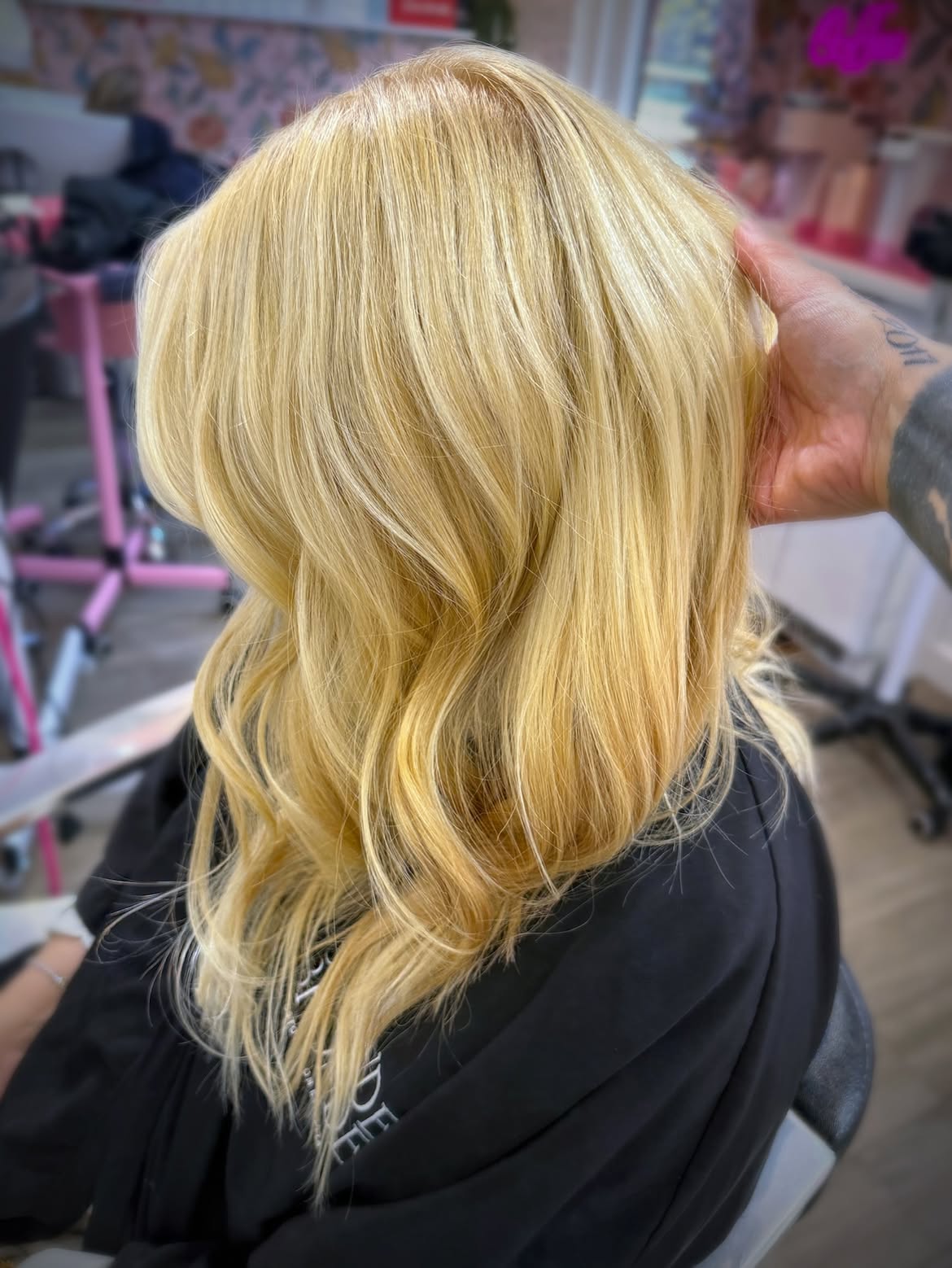
Quick answer: Going from dark brown to a soft bronde or caramel balayage can happen in a single appointment. Reaching a bright, light blonde from a dark base usually takes two to three sessions spread over several weeks to a few months, because lightener has to lift hair through several stages of warmth and hair needs recovery time in between. Your starting shade, color history, and target tone set the exact plan.
You’ve saved a photo of a bright, buttery blonde, and your natural color is dark brown. The first thing nearly every brunette asks in a consultation is how many appointments stand between the two. The honest answer is “it depends,” but not in a vague way. It depends on a few specific things, and once you know what they are, you can predict your own timeline fairly well.
Why Can’t Dark Brown Hair Go Blonde in One Visit?
Lightener works by removing natural pigment, and dark hair has a lot of it to remove. Colorists describe hair depth on a scale from 1 (black) to 10 (the lightest blonde). Natural dark brown sits somewhere around a 3 or 4, and a bright blonde lives at 9 or 10, so you’re asking your hair to travel five or six levels.
Along the way, hair doesn’t go straight from brown to blonde. As pigment lifts, it passes through red, orange, and yellow stages before reaching pale yellow, and the final result depends on your starting color, how long the lightener stays on, and how strong it is. Each stage takes more lightener or more time, and each one asks more of the hair’s strength. A stylist’s real decision isn’t “can we get there today?” It’s “how far can we go today and still leave the hair strong enough for the next step?”
What Decides How Long Your Timeline Will Be?
- Starting depth and texture. Darker, coarser, denser hair holds onto pigment more stubbornly and usually needs more time or more sessions to lift evenly.
- Color history. Previous dye stays in the hair and can lift unevenly, and at-home bleach or box dye can add sessions or change the plan entirely. Be specific about everything, including what you’ve since grown out.
- Your target shade. A soft honey bronde, an ash blonde, and platinum are three very different distances from dark brown.
- Hair condition. Healthy, elastic hair can take a bigger lift in one visit. Stressed hair needs smaller steps and more recovery time.
Hair condition is the one factor you can check before you book anything. There’s a simple at-home stretch test, plus the warning signs to look for, in how to know if your hair can handle going lighter.
How Many Sessions Does Each Blonde Goal Usually Take?
These are typical ranges, not promises. A stylist confirms the real number only after assessing your hair in person.
- Soft bronde or caramel dimension: often one appointment, using balayage or foilyage to lift your base strategically rather than dramatically.
- Dimensional blonde with a soft, rooted look: one to two sessions, with the second one brightening and refining what the first started.
- Bright ash or cool-toned blonde: commonly two to three sessions, since cool tones need hair lifted cleanly past the warm stages.
- Platinum or very light all-over blonde: the most involved route, often several sessions, and only when your hair health supports it. Not every head of hair is a candidate, and a good stylist will tell you so.
What Happens in Each Session?
Session one starts with a consultation, and often a test strand, to see how your hair responds to lightener. Then the stylist lifts to a level the hair can safely handle and tones it. You’ll often walk out in a stepping-stone shade, such as golden, honey, or caramel, rather than your final blonde. That’s the plan working, not a miss.
Session two lifts further where needed, refines the placement, and tones cooler or brighter depending on your goal. By this point your stylist can see how your hair handled the first round and adjust.
Session three, if you need one, is usually finishing work: final toning, softening the root so regrowth won’t look harsh, and fine-tuning brightness around the face.
Block out real time for these. At Blonde and Bronde, a partial balayage or partial foil typically takes about two to two and a half hours, and a double process color runs two and a half to four hours.
Why Does Hair Look Golden or Brassy Between Sessions?
Because it’s passing through the warm stages described above. Freshly lightened hair that hasn’t reached its final level shows its underlying warmth, and toning only does so much with it. That golden phase is normal. A fresh toner between sessions can improve how it looks while you wait, and pushing for a cooler result before the hair is ready is exactly how stylists end up over-processing.
Which Technique Gets a Brunette to Blonde?
It depends on how much lift you need and how dimensional you want the result:
- Balayage is hand-painted and gives a moderate, sun-kissed lift with a soft grow-out. It’s a strong first step for brunettes.
- Foilyage wraps the painted sections in foil, which traps heat and lets lightener lift several levels higher than open-air balayage. It’s often the better choice for dark or resistant hair.
- Double process (bleach and tone) lightens the whole head to one even level, for a uniform, all-over blonde.
Still weighing the first two? Balayage vs. foilyage breaks down which one suits which hair.
How Long Should You Wait Between Sessions?
Usually several weeks, sometimes longer, and the right gap depends on how your hair handled the last round. Your stylist is checking feel and elasticity, not just color. Stacking appointments close together to hit a date faster is the most common way a transformation turns into a correction. A bond-building treatment during lightening helps protect strength, but it doesn’t replace recovery time.
How Do You Protect Your Hair During the Transition?
- Skip at-home bleach and box dye between sessions. They complicate the plan and add stress your stylist can’t see.
- Cut back on heat styling, and use a heat protectant when you do style.
- Deep condition weekly and use a color-safe, sulfate-free shampoo.
- Trim regularly so the most fragile ends don’t split further up the strand.
- Limit chlorine and long stretches of sun while hair is mid-transition.
- Be completely honest about your hair history at every visit.
What Does Maintenance Look Like Once You’re Blonde?
This is the part brunettes underestimate. Your dark roots grow in against lighter hair, and the contrast is what makes color look overdue. How often you return depends on the service you chose:
- Partial balayage: typically every 10 to 14 weeks, since it grows out softly.
- Partial foil highlights: typically every 8 to 12 weeks.
- Double process: root touch-ups every 4 to 6 weeks, with toning every 4 to 8 weeks.
A shadow root, which blends a slightly deeper tone at the root, softens that contrast and stretches the time between visits. If low upkeep matters to you, choose your technique with the grow-out in mind from the start.
When Is “Not Yet” the Right Answer?
If your hair snaps when wet, feels gummy, or has been through recent at-home bleaching, going lighter right now will likely cost you more than it gives. A good stylist will suggest a strengthening period, a softer interim shade like bronde, or a slower staged plan. Hearing “not yet” at a consultation isn’t a rejection. It’s the reason your hair will still be intact when you reach the blonde you wanted.
When Should You Start If You Have a Date in Mind?
Work backward from the day you want to be blonde, whether that’s a wedding, a vacation, or simply summer. For a bright blonde from a dark base, plan on a few months and leave a buffer for the unexpected, such as a session that needs to be pushed back so your hair can recover. In Boston, fall is a natural time to begin a staged plan if you want to be fully blonde by the time spring and summer light arrive.
What Should You Bring to Your Consultation?
- Two or three photos of your target blonde, ideally in natural light, plus one or two shades you definitely don’t want
- Your full color history, including box dye, previous salon color, and any at-home bleach
- A realistic sense of how often you can come in, and how much time and budget you can commit across several visits
- Any date you’re working toward
The more of this your stylist knows up front, the more accurate your timeline will be. A personalized hair consultation is where it all gets turned into an actual plan for your hair.
Frequently Asked Questions
How long does it take to go from dark brown to blonde?
A soft bronde can take one appointment. A bright, light blonde from dark brown usually takes two to three sessions over several weeks to a few months, depending on your hair’s condition and your target shade.
Can you go from dark brown to blonde in one day?
Sometimes a lighter, dimensional result is possible in one visit on healthy hair, but reaching bright blonde from a dark base in a single day usually costs the hair too much strength, so most stylists stage it.
Will going blonde damage my hair?
Lightening always breaks down some of the hair’s internal bonds. Staging the lift, protecting bonds during the service, and allowing recovery time between sessions keep that manageable.
Is balayage or foilyage better for brunettes going blonde?
Balayage gives a softer, sun-kissed lift with an easy grow-out, while foilyage lifts several levels higher, which often suits dark or resistant hair. Your stylist will recommend one after assessing your hair.
Final Thoughts
The brunette-to-blonde timeline isn’t a mystery once you know what’s driving it: how much pigment has to lift, what your hair has already been through, and how bright you want to land. The slower route is almost always the one that leaves you with healthier hair and a more even, better-toned blonde, and a stylist who plans it in stages is protecting the result, not stalling.
Ready to map out your own timeline? Book a consultation and bring your photos.